Guides
Blown Glass, Crystal or Brass? Choosing the Right Material for Hotel Lighting
The three materials that dominate hospitality lighting look similar in photos but behave very differently on site. A short guide to what each does best, and how designers combine them.
Hand-blown glass
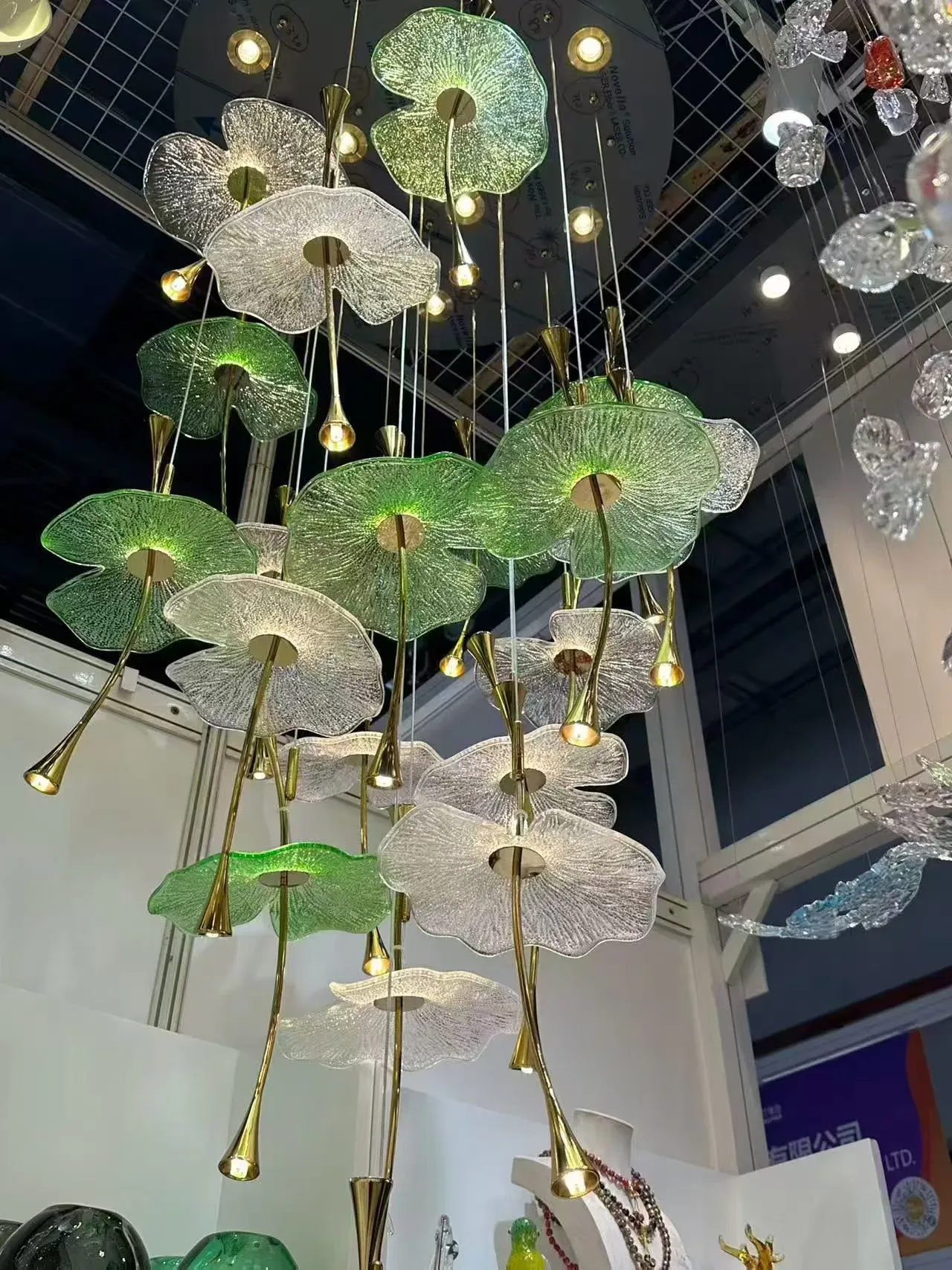
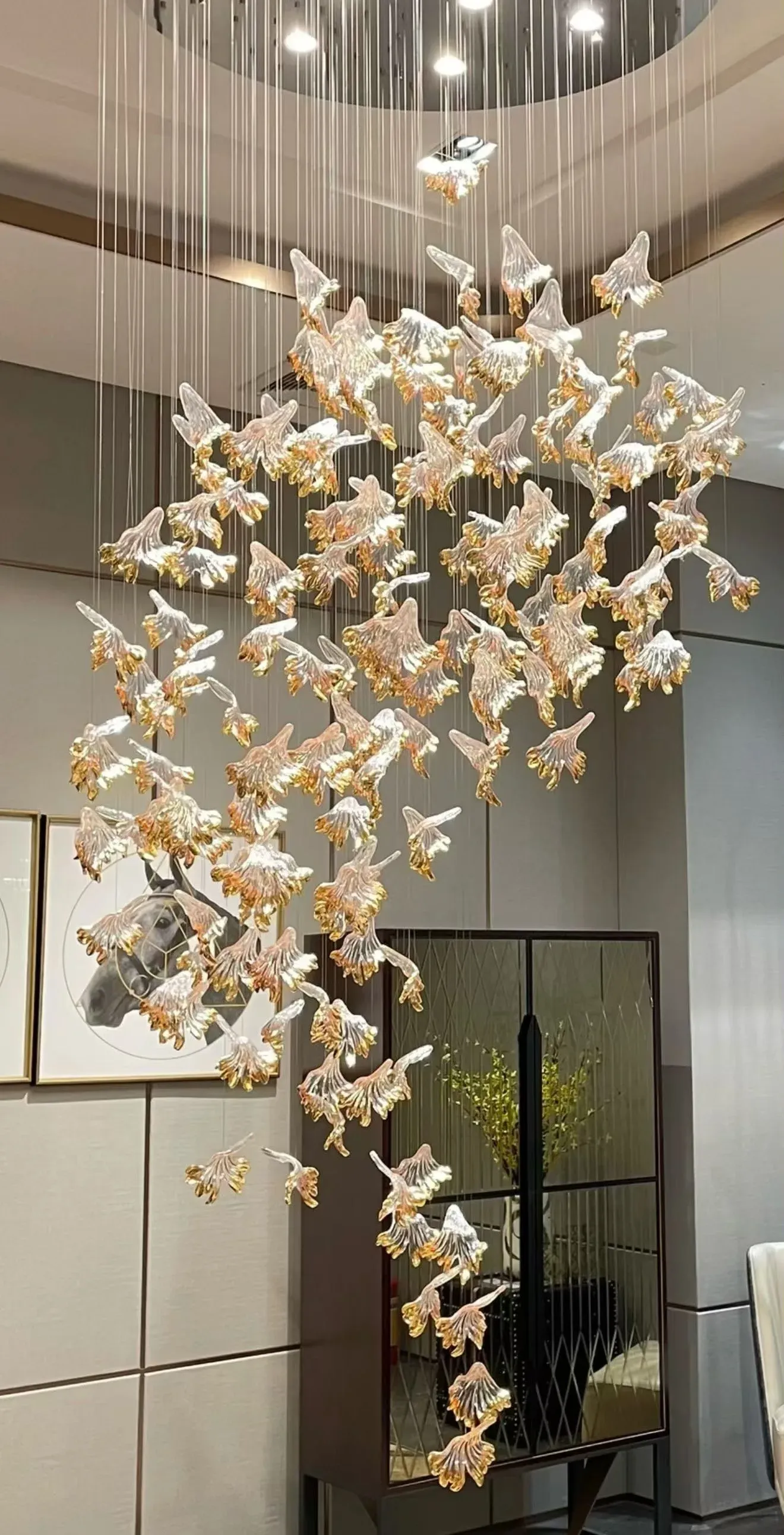
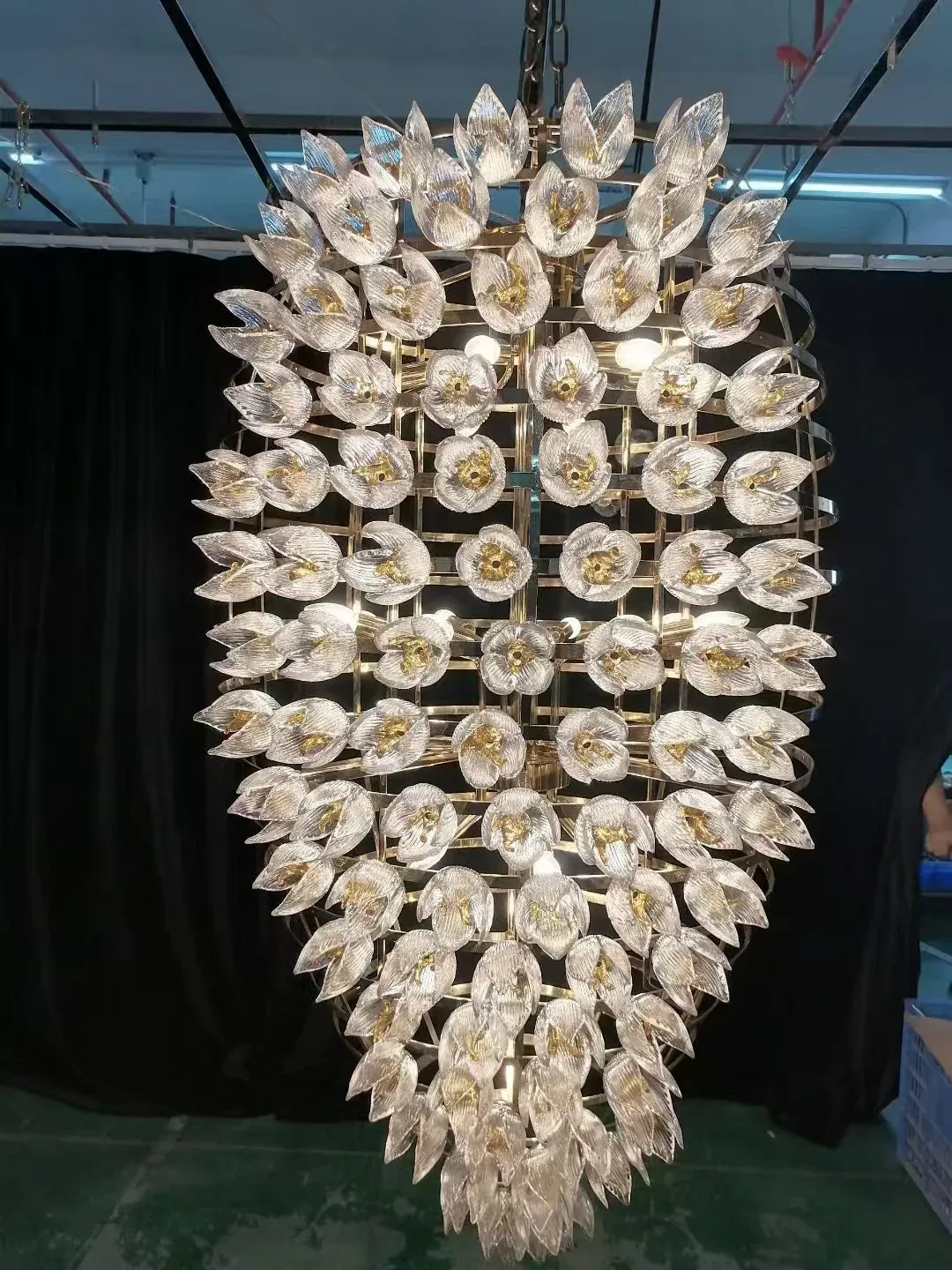
Mouth-blown glass is the signature material of decorative hotel lighting. Because every leaf, shade and petal is shaped by hand, no two pieces are identical - which is exactly the effect designers want in a lobby chandelier: organic, composed, never mass-produced. Color is added to the glass itself, so amber, emerald and smoke tones hold their depth for decades and match an interior palette precisely.
Blown glass suits sculptural compositions: cascading stairwell pieces, leaf clusters, tulip arrangements. It reads best where the fixture is seen up close - lobbies, staircases, reception areas.
Crystal
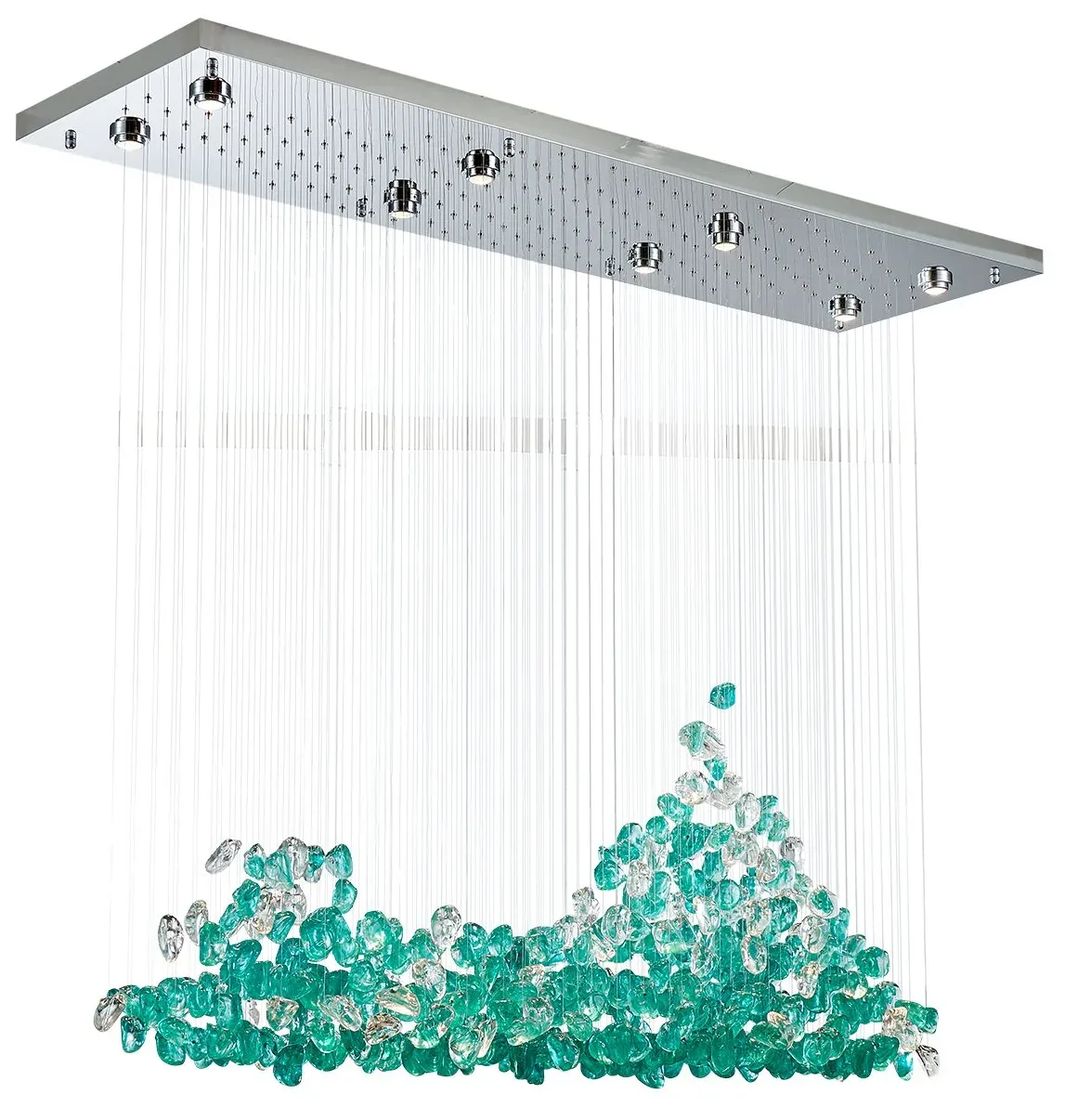
Crystal works through reflection and refraction. It is the right choice when the brief calls for sparkle and formality - ballrooms, grand foyers, banquet spaces. Crystal performs best in spaces with strong ambient or accent lighting around it, because its brilliance comes from the light that passes through it.
Weight is the practical consideration: crystal fixtures are heavier and their suspension frames must be engineered accordingly, which is why dimensions and ceiling structure should be confirmed early.
Brass and metalwork
Brass provides the structure and the finish details - stems, frames, arms and canopy hardware. Beyond holding the glass or crystal, the metal finish sets the tone: brushed brass for warm contemporary interiors, darker finishes for more dramatic schemes.
In our projects the brass is usually adjusted to coordinate with the interior hardware palette - door handles, balustrades and joinery details - so the lighting reads as part of the same design language.
How to decide
Most hotel projects do not choose one material - they combine them. A typical scheme: a blown-glass statement piece in the stairwell, crystal accents in the ballroom, and brass detailing throughout. The decision drivers are usually the style of the interior, the maintenance expectations of the operator, and the ceiling structure of the space.
If you are unsure, send us the interior design intent or a reference image. We will tell you honestly which material carries the effect - and where it does not.